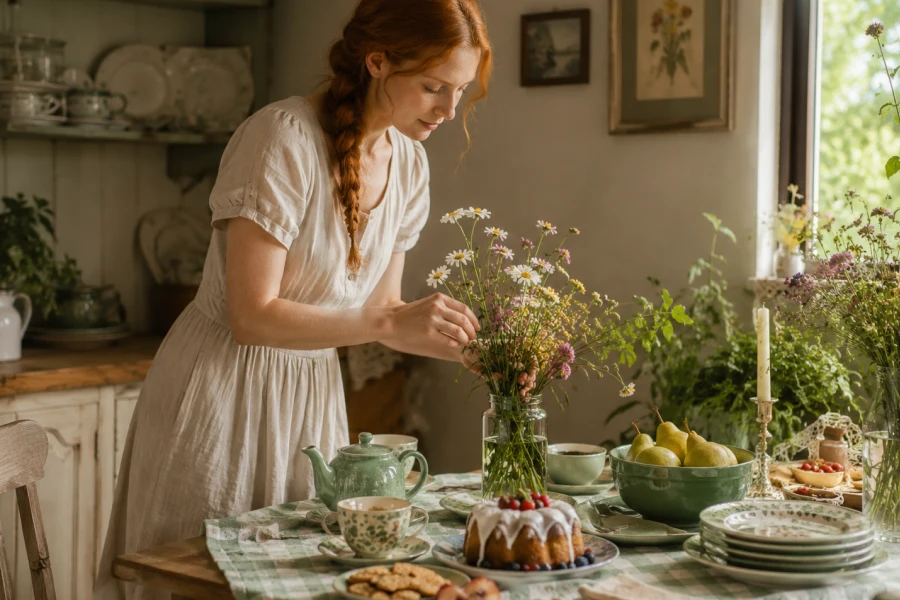
Vintage cottagecore table styling works best when the table feels gathered, not decorated. It should look as if each piece has a small story. You can create that feeling without owning rare antiques. Soft colors, old-fashioned shapes, and natural textures do most of the work. The mood should feel relaxed, romantic, and useful. Nothing should look too perfect. Nothing should feel like a showroom display. This approach turns ordinary meals into quieter rituals. Use cottagecore dining decor to sharpen the visual direction. A collected table always feels more intimate than a matched one.
This look succeeds because it softens the room. It makes dining feel slower and more personal. Guests notice texture before they notice expense. A faded tablecloth can feel richer than something glossy. A tiny floral plate can create instant warmth. Weathered pieces bring personality without demanding attention. The style also gives you freedom. Mismatched items become part of the charm. Small imperfections make the table feel human. That relaxed quality is exactly what makes the setting memorable.
Color controls whether the table feels authentic or costume-like. Choose shades that look softened by time. Cream, sage, dusty rose, pale blue, and warm brown work naturally. Avoid colors that feel too bright or synthetic. A faded palette lets patterns mix more easily. Florals can sit beside stripes when tones stay gentle. Wood, linen, ceramic, and glass add quiet variation. Keep metal accents aged rather than mirror-shiny. Add floral centerpiece styling for a soft focal point. The table should feel touched by daylight, not polished for display.
Texture makes the setting feel layered and real. Start with fabric because it changes the table immediately. Linen, cotton, crochet, and lace all bring softness. Wood adds grounding when the table becomes too delicate. Ceramic pieces add weight and comfort. Clear glass keeps the arrangement from feeling heavy. Woven baskets can hold bread, fruit, or napkins. Use only a few textures at once. Too many surfaces can make the table feel busy. A balanced mix feels natural, tactile, and quietly nostalgic.
This style can work even in a clean modern room. The key is contrast, not full transformation. Let the table carry the vintage mood. Keep surrounding furniture simple and calm. A modern dining chair can actually sharpen the softness. Use vintage pieces as accents instead of overwhelming the space. One patterned cloth may be enough. A few romantic plates can shift the whole atmosphere. handmade table accents help bridge old charm and current living. The room should feel styled, not transported.
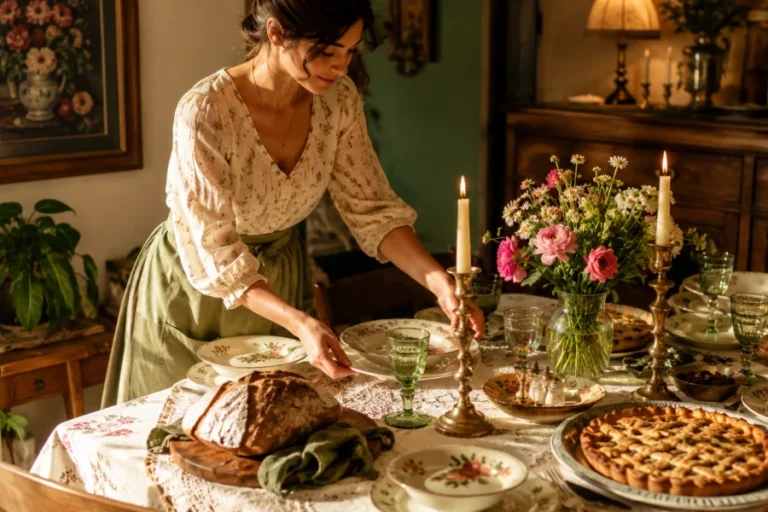
Perfection can make this look feel flat. Slight irregularity gives the table life. Use plates with different rims. Let napkins fold softly instead of sharply. Choose flowers with varied stem lengths. Place candles at uneven heights. These choices create movement without creating mess. The table should look cared for, not controlled. Guests respond to ease more than precision. Imperfection becomes the detail that makes everything feel honest.
The danger is turning charm into a costume. Avoid adding every cottage detail at once. Skip props that do not serve the meal. Use fewer pieces with stronger feeling. Keep the food central to the scene. Bread, fruit, soup, cake, or tea can become decoration naturally. Let practical items carry beauty. A pitcher can be both useful and atmospheric. A serving bowl can replace a centerpiece. Warmth matters more than making every detail announce the style.



Leave a comment