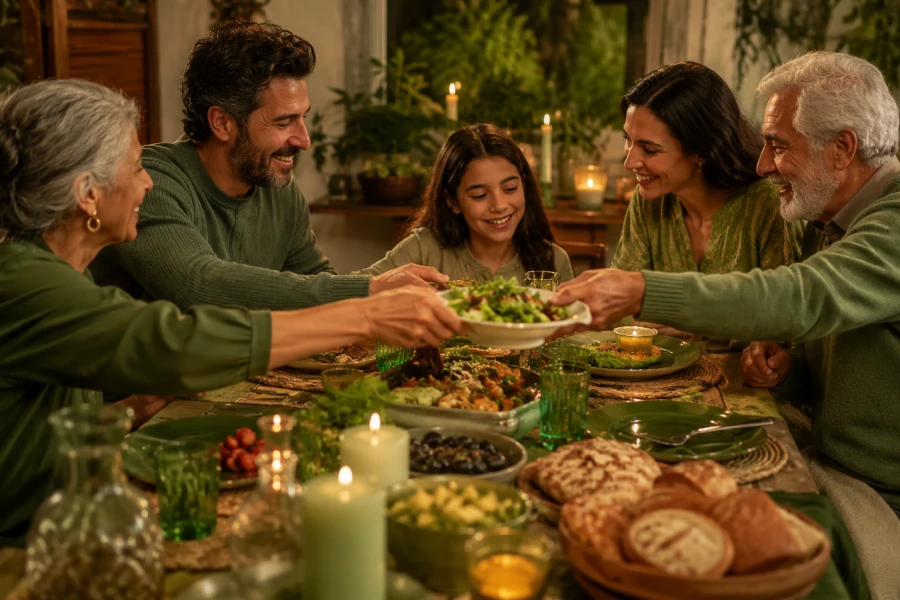
Family dining rituals matter because they turn meals into shared time. They do not need to be formal or complicated. A ritual can be as small as lighting a candle. It can be a question everyone answers. It can be a phone basket near the kitchen. What matters is repetition with meaning. Families need predictable moments that feel calm and welcoming. Dinner can become that anchor with the right rhythm. Explore meaningful mealtime routines for deeper structure. The table becomes more powerful when everyone knows what to expect.
Stable rituals help families feel connected during busy weeks. Children understand patterns before they understand explanations. Adults also benefit from predictable pauses. A shared meal signals that everyone belongs somewhere. It creates a soft boundary around the day. The ritual does not need to happen nightly. Consistency matters more than frequency. Once or twice a week can still matter deeply. The table becomes a place of return. That emotional return is what gives the habit staying power.
The easiest ritual begins with one small action. Choose something simple enough to repeat. Light a candle before serving. Share one good thing from the day. Put phones away until plates are cleared. Let someone choose the music. Pass bread or salad around the table. These gestures seem small, but they create rhythm. screen-free dinner habits can make the moment feel protected. Start small so the habit survives real life.
Busy families need rituals that fit imperfect schedules. The meal does not need to be homemade. Takeout can still happen around a meaningful table. Breakfast can replace dinner during intense weeks. Sunday lunch can become the family anchor. The ritual should support connection, not create pressure. Keep the setup easy. Use familiar foods when time is tight. Let the conversation stay light when everyone feels tired. A simple repeatable moment beats an elaborate plan that rarely happens.
Good rituals give everyone a role. Young children can set napkins. Older children can pour water. Teens can choose a question or playlist. Adults can model attention without forcing emotion. Participation should feel natural, not assigned like homework. Rotate roles when the habit becomes stale. Let each person influence the table sometimes. This builds ownership across ages. family table traditions grow stronger when everyone helps shape them. Inclusion keeps the ritual from feeling like one person’s project.
Conversation should not become a performance. Some nights will be quiet. Some answers will be short. Some people need time before opening up. Respecting that rhythm protects trust. Ask questions that allow easy entry. Avoid turning dinner into a family meeting every night. Save corrections for another moment when possible. Let humor appear naturally. The table should feel safe before it feels deep. Warmth matters more than impressive conversation.
Long-term rituals need flexibility. Life will interrupt even the best habits. Missed dinners do not mean failure. Return to the ritual without guilt. Adjust the timing when seasons change. Shorten the meal when schedules tighten. Refresh the question when conversation feels repetitive. Keep the core feeling steady. The ritual should say, we come back to each other. That message matters more than any perfect table setting.


Leave a comment