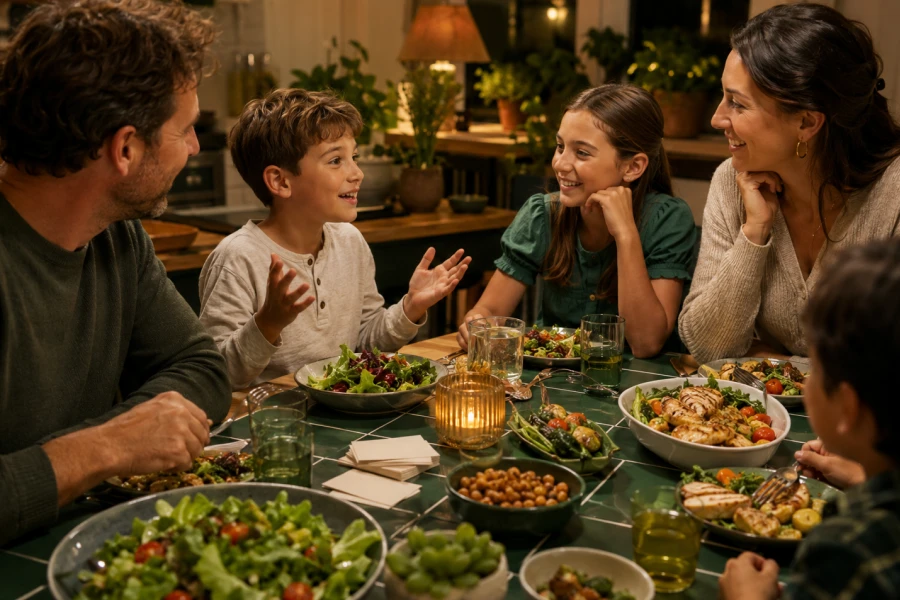
Conversation starters for family dinner work when they feel natural, not scripted. The best questions make people smile, remember, or reflect briefly. They do not put anyone on the spot. They also avoid turning dinner into a lesson. Families need conversation that respects mood and timing. A tired table needs lighter prompts. A relaxed table can handle deeper ones. The right starter opens a door without pushing anyone through it. Try conversation starter ideas that match real family rhythms. Dinner feels better when talking begins easily.
Simple questions are easier to answer. They reduce pressure for everyone at the table. Children understand them quickly. Teens can respond without feeling cornered. Adults can answer honestly without overexplaining. A simple prompt also leaves room for surprise. It can lead somewhere deeper naturally. The best questions do not sound impressive. They sound easy to join. That ease is what keeps conversation moving.
Energy should guide the question style. On tired nights, ask something light. On relaxed nights, ask something more reflective. After a difficult day, keep the tone gentle. During celebrations, invite memories or hopes. This approach respects the room. It also prevents conversation from feeling forced. A good question can be playful, practical, or thoughtful. dinner table questions work best when they fit the moment. Reading the table matters as much as choosing the words.
Younger children need concrete prompts. Ask about colors, animals, games, and small wins. Invite them to choose between two options. Ask what made them laugh. Ask what they would invent for dessert. Keep the question short. Let answers become silly when needed. Playfulness builds comfort at the table. Do not correct every response. The point is participation, not polished storytelling.
Teens often respond better to indirect questions. Ask about opinions, preferences, or observations. Avoid questions that sound like surveillance. Try asking what trend feels overrated. Ask what rule they would change at school. Ask which meal deserves a comeback. Give them room to be funny or skeptical. Respect shorter answers at first. family bonding moments often begin with low-pressure topics. Trust grows when teens feel invited, not examined.
A starter is only the beginning. Listen for the detail that carries energy. Follow that detail with curiosity. Ask what happened next. Ask why that stood out. Share a related memory when it fits. Keep the exchange balanced. Do not make one person answer everything. Let conversation move around the table. A natural follow-up often matters more than the original question.
Turn prompts into a small habit. Keep cards in a bowl. Let one person choose each night. Rotate who answers first. Allow anyone to pass. Repeat favorite questions when they work. Add new prompts as children grow. Keep the ritual short enough to survive busy evenings. The habit should support dinner, not dominate it. Over time, the table learns how to begin.


Leave a comment