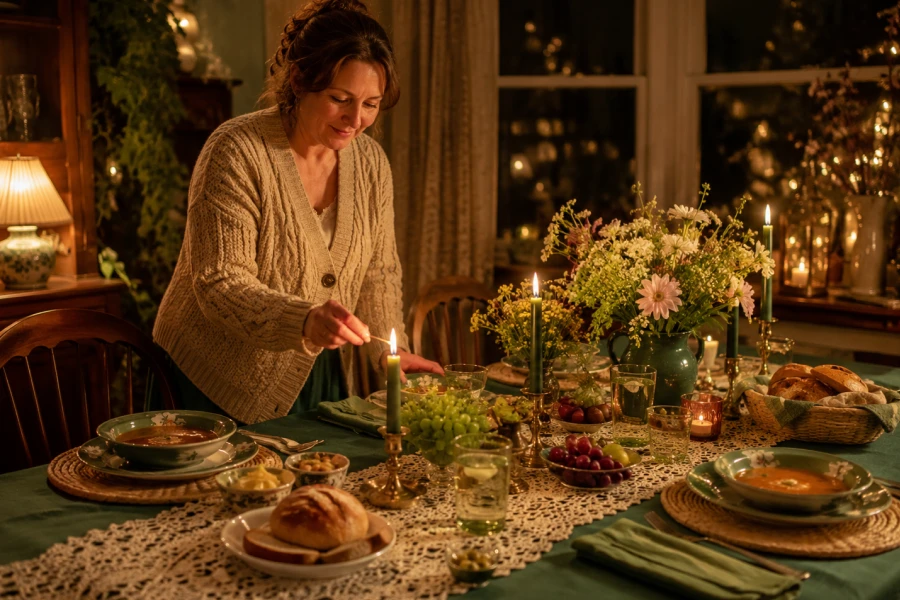
Cozy grandmacore decor turns a dining table into a place people want to stay. It favors softness, memory, and comfort over perfect coordination. The look should feel generous without feeling crowded. You can build it with linens, candles, ceramics, flowers, and practical serving pieces. Every detail should suggest care. Every layer should still leave room for real dining. That balance creates warmth without visual noise. This style works for dinners, tea, brunch, and quiet celebrations. Start with nostalgic hosting ideas that feel personal. The finished table should look loved before it looks styled.
The dining table is the natural home for this look. It already holds conversation, food, and small rituals. Adding softness makes those moments feel more intentional. A cloth changes the mood quickly. A candle slows the room down. A floral plate can make a simple meal feel thoughtful. The style does not demand expensive pieces. It rewards objects that feel sincere. That makes it approachable for everyday homes. Comfort becomes the strongest design decision.
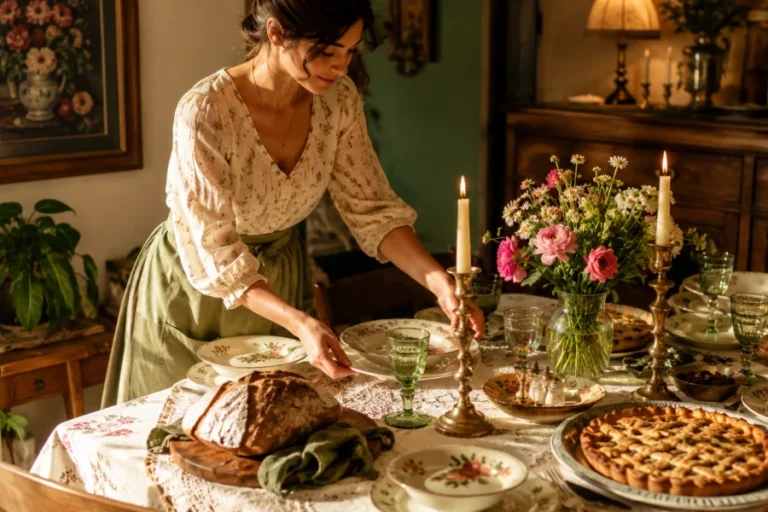
Useful pieces make the table feel authentic. A pitcher should pour. A bowl should serve. A basket should hold bread or napkins. When objects have a purpose, the setting avoids clutter. Beauty appears through use rather than performance. This is especially important with nostalgic interiors. Too many decorative pieces can make the table feel staged. Begin with items the meal actually needs. Then choose the prettiest version of each item. Practical beauty creates the relaxed charm this style needs.
Light and fabric create most of the atmosphere. Use a soft tablecloth or runner as the base. Add napkins that feel relaxed in the hand. Avoid stiff folds unless the occasion feels formal. Layer lamps or candles instead of strong overhead light. Warm light makes patterns feel softer. It also makes food look more inviting. A candlelit dinner setting can transform simple dishes. Keep flames low and safe. The table should glow gently from the center outward.
This look does not need a special occasion. Everyday meals benefit from small gestures. Use cloth napkins on a weeknight. Place fruit in a bowl instead of leaving it packaged. Add one tiny vase near the center. Serve water in a pitcher. Put bread on a plate instead of in a bag. These details take little effort. They make dinner feel more cared for. The table becomes a habit of warmth, not a rare production.
Seasonal styling should feel gathered from life. In spring, use small blossoms and pale linens. In summer, add herbs, berries, or garden flowers. In fall, bring in apples, brown glass, and warm textiles. In winter, use candles, cream dishes, and heavier cloth. Avoid overfilling the table with seasonal objects. One or two signals are usually enough. Food can carry the season beautifully. seasonal table details work best when they support the meal. The mood should shift gently, not dramatically.
Editing keeps the table comfortable. Leave space for elbows, glasses, and serving dishes. Keep centerpieces low and narrow. Use fewer candles if plates are close together. Remove anything that blocks conversation. A beautiful table should never make guests nervous. Test the setting by sitting down before guests arrive. Reach for a glass and serving spoon. Notice what feels awkward. Then remove one item and let the table breathe.



Leave a comment